Jamshedji Constro
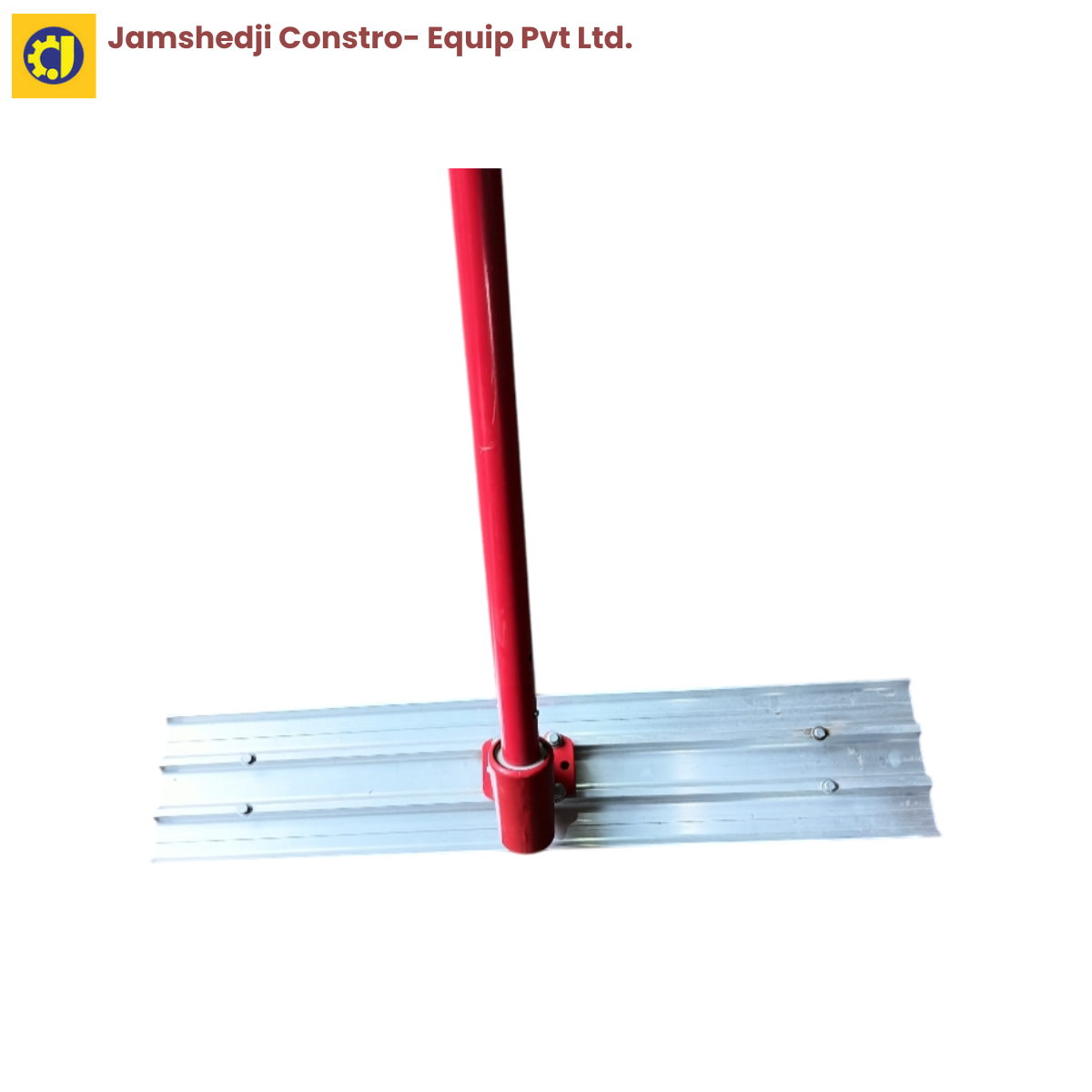
Aluminium Bull Float – 1200x200mm Blade, 1.8m Handles
Aluminium Bull Float – 1200x200mm Blade, 1.8m Handles
The Jamshedji aluminium bull float is a manual concrete finishing tool with a 1200 × 200 mm aluminium blade and three 1.8 metre bolt-together handles, giving over 5 metres of reach. It is dragged across a fresh slab after screeding to flatten ridges, push down aggregate and open the surface before troweling. The lighter aluminium blade and narrower 200 mm width make it easier to control across a long shift and on tighter pours.
Key specifications at a glance
- Blade: 1200 × 200 mm aluminium
- Handles: 3 × 1.8 m (over 5 m combined reach)
- Connector: turbine tilt connector
- Package size: 1870 × 220 × 60 mm
- Operation: manual
- Blade material: lightweight aluminium
What a bull float does, and where it sits
After a slab is screeded it is flat but rough — there are ridges left by the screed, aggregate sitting proud, and an open, coarse surface. A bull float is the tool that comes next: pushed and pulled across the surface on long handles, it knocks the ridges down, presses the coarse aggregate below the surface and floats a layer of cement paste to the top, leaving the slab ready for edging and troweling.
The tilt connector is what makes it work at reach. As the operator pushes the float away and pulls it back, the connector angles the leading edge up so the blade skims rather than digs — so a slab far wider than arm's length can be floated from the edge without walking on it.
Aluminium or stainless steel — which blade
The two Jamshedji bull floats are not a quality ladder — they are different blades for different priorities, and many finishers own both.
- This aluminium float (1200 × 200 mm) — aluminium is lighter to handle across a long shift, and the narrower 200 mm blade is easier to control on tighter pours and detailed work. The trade-off is that aluminium wears faster than stainless.
- Stainless steel float (1200 × 300 mm) — the wider 300 mm blade covers more area per pass and stainless resists wear and corrosion, so it holds up to heavy, repeated commercial use. The trade-off is weight.
The rule of thumb: aluminium for lightness and control on smaller or detailed work, stainless for durability and area on big commercial slabs.
Key features
- 1200 × 200 mm aluminium blade — light to handle, easy to control
- Narrower blade suits tighter pours and detailed finishing
- Three 1.8 m handles bolt together for over 5 m of reach
- Turbine tilt connector angles the blade on the push and pull stroke
- Reduces operator fatigue over a long finishing session
- Handles break down for transport and storage
Where it fits in the slab workflow
The bull float sits between screeding and troweling. The slab is levelled first with a screed board vibrator, floated with the bull float, and once it has taken its initial set, finished with a power trowel. Edges and corners a power trowel cannot reach are finished with a 600 mm power trowel edger.
Full specifications
| Type | Manual bull float, aluminium blade |
| Function | Concrete slab levelling and finishing |
| Blade material | Aluminium |
| Blade size | 1200 × 200 mm |
| Handle length | 1.8 m × 3 (bolt-together) |
| Connector | Turbine tilt connector |
| Package size | 1870 × 220 × 60 mm |
| Brand | Jamshedji |
| Supplied by | Jamshedji Constro Equip Pvt. Ltd., MIDC Bhosari, Pune |
Buying, GST and delivery
- Supplied with a GST invoice (18% GST — CGST + SGST within Maharashtra, IGST interstate), ITC eligible
- Sold outright — Jamshedji Constro Equip does not rent or hire equipment
- Dispatched F.O.R. Pune to sites across India, plus export to Bangladesh, UAE, Kenya, Tanzania, Sri Lanka and Nepal
- Backed by a manufacturer founded in 1983, ISO 9001:2015 and MSME/Udyam registered, with 5,000+ clients
Frequently asked questions
What is a bull float used for?
Floating a freshly screeded slab — knocking down ridges, pressing coarse aggregate below the surface and bringing cement paste to the top, so the slab is ready to edge and trowel. It is the step between screeding and troweling.
Aluminium or stainless steel bull float — which should I buy?
Aluminium for lightness and control on smaller or detailed pours; it is easier to handle all day but wears faster. Stainless for durability and wider coverage on large commercial slabs; it resists wear and corrosion but is heavier. Many finishers keep both.
Why is this blade narrower than the stainless one?
The aluminium blade is 200 mm against the stainless 300 mm. A narrower blade is easier to control and lighter to work, which suits tighter pours and detailed finishing over throughput.
How far does it reach?
Three 1.8 m handles bolt together for over 5 m of reach, enough to float a wide slab from the edge without walking on the wet surface.
What does the turbine connector do?
It tilts the blade as you push and pull, lifting the leading edge so the float skims the surface rather than gouging it. Without a tilt connector a long-handled float digs in at the far end of each stroke.
Does it replace a power trowel?
No — it comes before one. The bull float prepares the surface; the power trowel finishes it once the slab has begun to set.
What is the price of an aluminium bull float in India?
Send your location on WhatsApp for a GST-inclusive quotation including freight.
Get a GST-inclusive quotation — tell us your slab size and whether you need the aluminium or stainless blade and we will confirm pricing and freight.
Available with delivery in: Pune, Mumbai, Hyderabad, Bangalore and other major cities. See all construction machinery across India or browse the full cement and concrete machines range.
Share